Macarons: Crisp & Creamy

Santosh Jha
| 14-05-2026
 · Food Team
Cracking the first perfect batch of macarons is one of those kitchen moments you genuinely don’t forget.
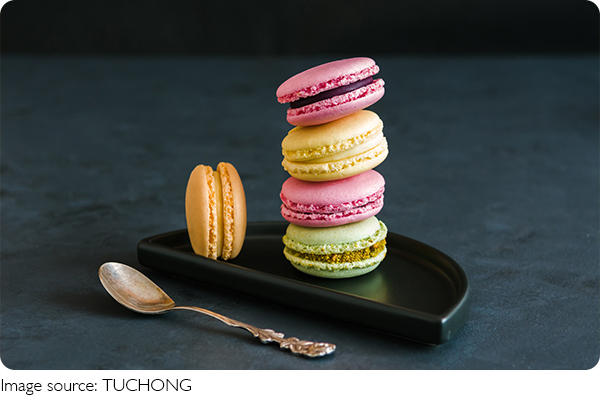
The shells are smooth, slightly domed, with that signature ruffle at the base — the “foot” — and when you bite in, there’s a thin crunch giving way to a chewy, almost creamy center. Achieving this takes patience and precision, but it is absolutely possible with careful attention.
Traveling to a city known for its patisseries and cafés is a wonderful way to experience these delicate treats. Sampling macarons in local bakeries and pairing them with a cup of tea or coffee provides a true taste of the region’s culture and craftsmanship.
Ingredients
For the macaron shells:
- 100g (1 cup) almond flour
- 100g (¾ cup + 3 tbsp) powdered sugar
- 75g (about 2½ large) aged egg whites, room temperature
- ¼ teaspoon cream of tartar
- 75g (6 tablespoons) granulated sugar
- Gel food coloring (optional)
For the buttercream filling:
- ½ cup (113g) unsalted butter, room temperature
- 1½ cups (180g) powdered sugar, sifted
- 1–2 tablespoons heavy cream
- ½ teaspoon vanilla extract
- Pinch of salt
Step-by-Step Instructions
1. Prep Is Half the Battle
Age your egg whites by separating them, covering loosely, and leaving them in the fridge for at least 24 hours. This slightly dries them out, stabilizing the meringue. On baking day, let them come to room temperature for 30 minutes.
Line two baking sheets with parchment paper. Ensure all bowls and beaters are clean, dry, and grease-free — any residue prevents the egg whites from whipping properly.
2. Sift, Process, Sift Again
Combine almond flour and powdered sugar in a food processor, pulsing for 30 seconds to create an ultra-fine mixture. Sift twice, discarding any large pieces. This prevents bumpy shells.
3. Make the Meringue
Whip the egg whites on medium speed until foamy, then add cream of tartar. Gradually add granulated sugar, increasing to medium-high speed, until stiff, glossy peaks form. Fold in gel food coloring here, if using — never liquid dye.
4. Macaronage — The Critical Fold
Add the almond flour mixture all at once to the meringue. Fold with a wide spatula in a sweeping motion, intentionally deflating the mixture but not completely. Stop when the batter flows off the spatula in a thick, slow ribbon that sinks back in within 10 seconds.
Transfer to a piping bag with a round tip. Pipe 1.5-inch rounds, spaced 1 inch apart.
5. Rest, Then Bake
Let shells rest at room temperature for 30–60 minutes until a dry skin forms. Bake at 325°F (160°C) for 12–14 minutes, one sheet at a time, on the center rack.
Cool completely before filling. Prepare buttercream: beat butter until creamy, add powdered sugar, cream, vanilla, and salt. Pipe onto a shell, then sandwich with another. Refrigerate at least 24 hours — this softens the shell and perfects the texture.
Things to Watch For
- Hollow macarons: Under-mixed batter or underbaked shells.
- Cracked tops: Skin didn’t form long enough, or oven too hot.
- Flat cookies: Over-mixed batter.
- Rubbery shells: Overmixed and overbaked.
Tip: Always use a kitchen scale; measuring by cups can be inaccurate.
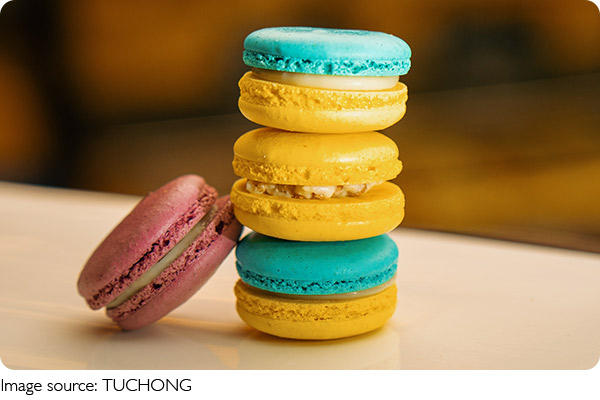
Mastering macarons at home is a labor of love, but experiencing freshly made pastries in local cafés is equally rewarding. The delicate shells, creamy fillings, and careful craftsmanship make each bite a celebration. Whether you are baking at home or exploring bakeries, macarons embody a perfect blend of art, culture, and flavor, suitable for all food lovers.